09, June 2026
Nigeria’s crude oil output faces a major threat after protesters shut down 13 oil flow stations in Delta State on Monday, halting operations for Shell, Chevron, and NESTOIL/NECONDE.
Industry sources say the affected facilities have a combined production capacity of about 400,000 barrels per day. The shutdown means Nigeria could lose 400,000 bpd in crude output if the situation persists.
*Facilities Seized, Logistics Blocked*
The flow stations affected are Odidi 1 and 2, Batan, Ogbanabou, Jones Creek, Otunana, Egwa 1 and 2, Abiteye, Makaraba, Olero Creek, Dibi Field, and Opuekeba.
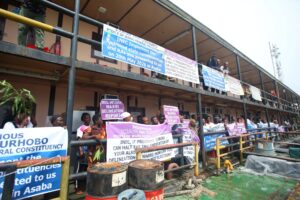
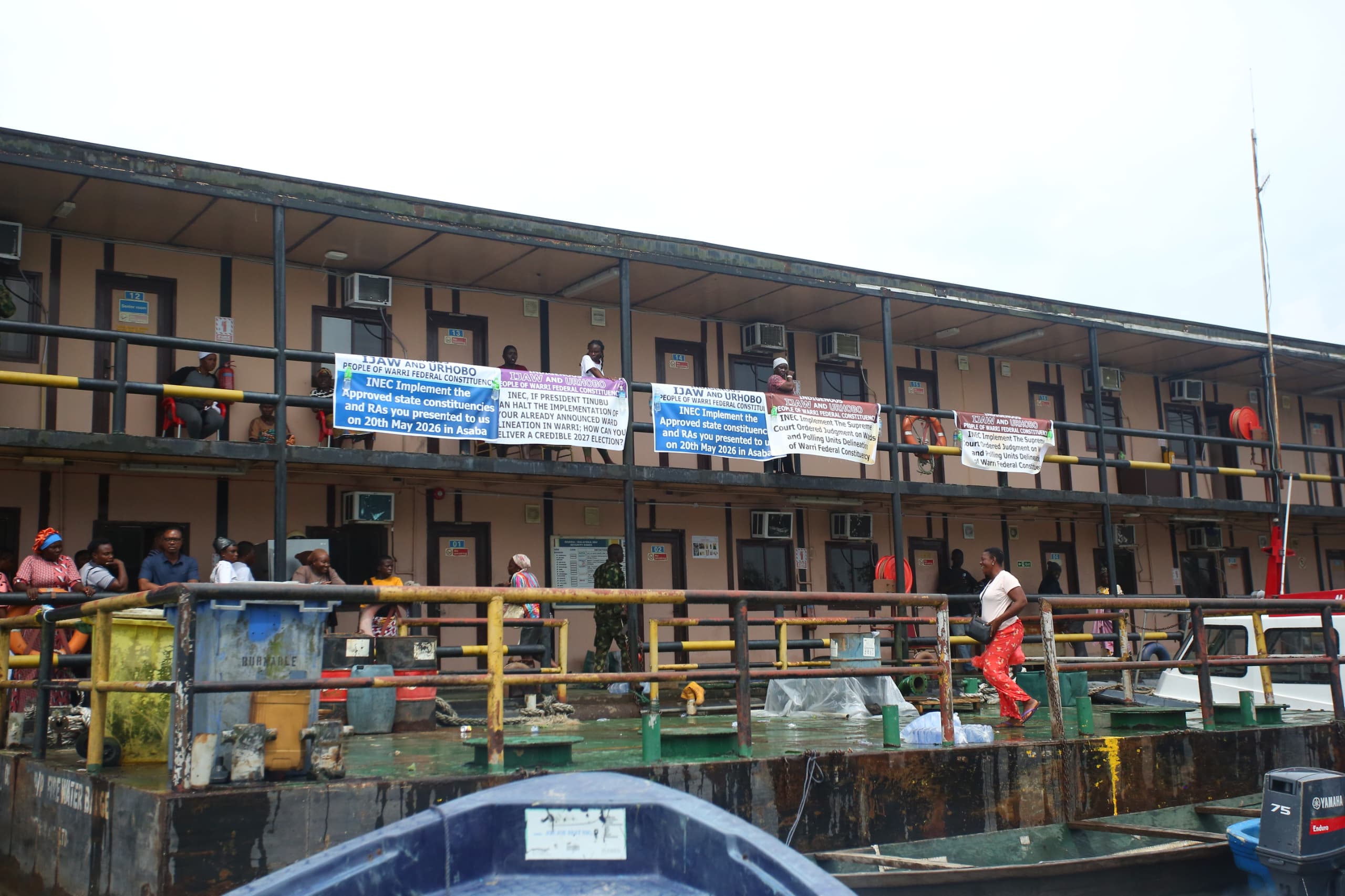
Hundreds of women and youths from Gbaramatu, Ogbe-Ijoh, Isaba, Egbema, and Diebiri Kingdoms in Warri Federal Constituency took control of the sites. The area covers Warri South, Warri South West, and Warri North LGAs. Reports indicate that the protesters displaced company security personnel and staff before occupying the facilities.
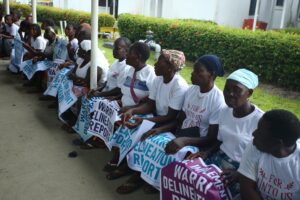
In addition to seizing the flow stations, the protesters have blocked all logistics supplies to Shell Petroleum Development Company (SPDC), Chevron Nigeria Limited (CNL), and NESTOIL/NECONDE through the waterways. This has further crippled operations for the three energy firms.
*Protest Linked to INEC Delineation Delay*
The protesters, largely of Ijaw ethnic extraction, are demanding the implementation of the recently approved ward delineation exercise by the Independent National Electoral Commission (INEC). They allege that their Itsekiri neighbors are making clandestine moves to stop INEC from implementing the report, which they insist was properly conducted.
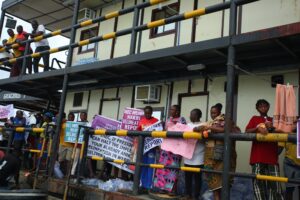
The takeover of the facilities happened less than 24 hours after Ijaw and Urhobo groups in Warri Federal Constituency threatened to shut down oil production if INEC failed to implement the final delineation report.
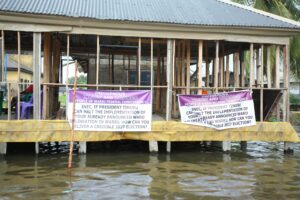
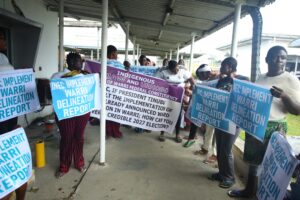
Protesters carried placards reading “INEC: Implement Warri Delineation Report,” “Court Ordered Judgment on Wards and Polling Units Delineation,” and “No Implementation, No Production.” They vowed that oil production would remain shut until INEC fully implements the approved ward delineation.
*Accusations of Deliberate Delay*
Speaking for the protesters, Chief (Mrs.) Maria Ebike accused INEC of deliberately stalling implementation despite concluding consultations and issuing recommendations meant to address longstanding complaints about political representation in the constituency.
She said the ward delineation was intended to guarantee fairness, equity, and proper representation for communities in Warri Federal Constituency. Ebike alleged that “some powerful forces in the Presidency” were working to frustrate the report’s implementation.
“We have waited patiently for the authorities to do the right thing. Since they continue to ignore our voices, we have no option but to demand justice through peaceful protests. No implementation of the ward delineation, no oil production,” Ebike said.
*Background to the Crisis*
In 2022, the Supreme Court ordered a fresh delineation exercise in Warri Federal Constituency. Complying with the order, INEC carried out the exercise and presented its final report to stakeholders in Asaba on May 20, 2026.
Since then, tension has grown among Ijaw, Urhobo, and Itsekiri stakeholders in Warri and its riverine communities. Ijaw and Urhobo groups accuse the Itsekiri of using contacts in the Presidency and the Office of the National Security Adviser to obstruct INEC’s legitimate action.
Stakeholders warn that failure to implement the report transparently could escalate the crisis and further disrupt oil production in the region.