03, June 2026
Cancer researchers announced several treatment advances during the American Society of Clinical Oncology’s (ASCO) annual meeting in Chicago, which wrapped up Tuesday. Findings included encouraging early data on weight loss drugs and a major step forward in pancreatic cancer treatment.
Here’s a breakdown of key developments from the summit:
*1. Major advance in pancreatic cancer treatment*
Among over 7,000 studies presented, one pancreatic cancer trial drew particular praise. Focused on one of the deadliest cancers, it marked the first significant breakthrough against the disease in decades.
The treatment, developed by U.S. biotech Revolution Medicines, uses a new molecule called daraxonrasib. In patients with an aggressive, common form of pancreatic cancer, it showed significantly greater efficacy than standard chemotherapy. Half of patients on daraxonrasib survived more than 13 months — double the survival time seen in the chemotherapy group.
“I think this represents, I would say, an unprecedented paradigm shift in how we’re treating advanced pancreatic cancer,” said oncologist Monty Pal.
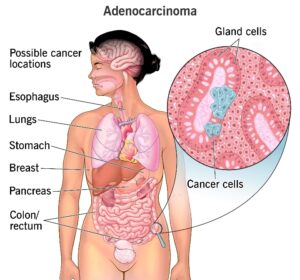
The research also raises hope for other cancers. Daraxonrasib targets a protein involved in multiple cancer types that, until recently, had not responded to therapies.
*2. Could Ozempic impact cancer progression?*
Researchers shared very early but promising data suggesting weight-loss drugs like Ozempic and Wegovy may affect cancer outcomes.
These GLP-1 drugs were originally developed for diabetes and are widely used by Americans with obesity and diabetes — groups at higher risk for certain cancers. U.S. researchers tested whether the medications could prevent cancer from advancing from an early stage to metastatic disease.
Results showed a 38% to 50% reduction in disease progression across four cancers — lung, breast, colorectal, and liver — in patients on GLP-1 agonists compared to those on conventional diabetes treatments.
The data is encouraging but still needs confirmation in randomized clinical trials, said study author Mark Orland. “It’s just the start,” he added.
*3. Better-targeted treatments: Less surgery for some breast cancer patients*
Several studies looked at scaling back treatments without losing effectiveness. One trial re-evaluated axillary lymph node dissection, a surgery to remove armpit lymph nodes in some breast cancer patients.
The new trial found that skipping the surgery — which has significant side effects — “is safe for patients with breast cancer that has spread” to just one or two lymph nodes.
“We are probably way over performing actually lymph node dissections, and causing long term side effects in our patients when it’s unnecessary,” said Julie Gralow, ASCO vice president, praising the findings.
*4. Personalized approach for prostate cancer*
Researchers highlighted an international trial on prostate cancer, the most common cancer in men and the second-leading cause of cancer deaths.
The study could change care for patients with genetic mutations who tend to develop more aggressive disease. It tested a combination: enzalutamide to block hormonal signals fueling tumors, plus talazoparib to disrupt DNA repair in cancer cells.
For patients with BRCA2 mutations — linked to one of the most aggressive forms — adding talazoparib cut risk of tumor progression or death by 65%.
The results are “exceptional” and “a major step forward,” said French-Moroccan professor Karim Fizazi, who coordinated the study.
*5. Blood tests: Promise but not ready yet*
Some studies underscored the potential of liquid biopsies, especially for early detection of treatment resistance. There’s also hope blood tests could help detect cancers that lack standard screening.
One study examined Galleri, a blood test that aims to detect 50 types of cancer before symptoms appear. Based on data from more than 140,000 U.K. patients, results were mixed. While encouraging in some areas, the test did not show a reduction in late-stage diagnoses across 12 types of cancer.