By Oghenefejiro Emado
It was 9am on Tuesday morning. Makurdi airport.
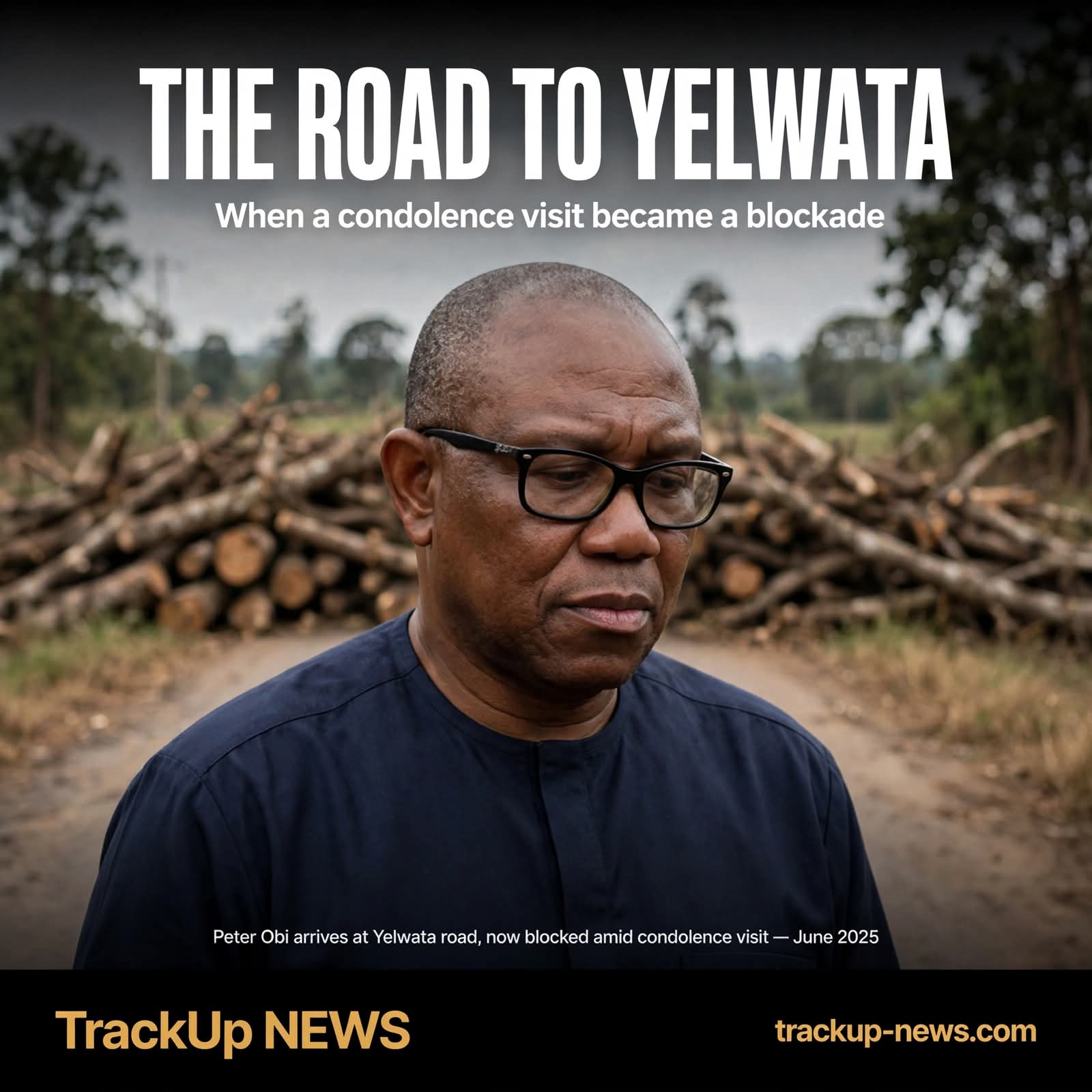
Peter Obi stepped out with the expectation to cry with the bereaved. No rally. No loudspeakers. No party logo. According to his team, he came to do one thing — drive to Yelwata, kneel where over 270 people were massacred on June 13, 2025, and tell the families: “I see your pain.”
He never got to Yelwata. He never had the opportunity to cry with the people.
Less than two kilometers from the airport, on Makurdi-Gboko Road, his convoy stopped. Youths with sticks. Chants of “Obi, go back.” Stones were thrown. Security watching.
A man who said he came to mourn was forced to mourn from afar. He returned to the airport and left Benue without reaching the grieving community.
Obi’s words after: _”I came to Benue not for politics but to mourn with our people… It is ridiculous and very, very worrisome.”_
It is on record that Yelwata has buried 270 people. That number is not politics. It is 270 empty chairs, 270 mothers who still wait by the door to see their children coming back home, 270 names in the community diary, 270 names on a list that should not exist.
The question that morning on Makurdi-Gboko Road was not about NDC or APC. It was: _Can a Nigerian travel within Nigeria to cry with fellow Nigerians?_
The Benue Government said it did not know about his visit. The NDC called it a shameful obstruction. Rights groups called it intolerance. But beyond statements and condemnations, Yelwata remains.
What was blocked was not a convoy, but a moment of human empathy. A moment where a presidential candidate, regardless of party, could sit on a mat in Guma LGA and say: “Your loss is our loss. Your pain is our pain.”
In Nigeria, we have placed politics so high that humanity has become infinitesimal. We check party logo before we check the wound.
Tuesday on the road to Yelwata, the wound was left unchecked.
Today, it is Yelwata. Tomorrow, it could be anywhere.
Some leaders, irrespective of party, have condemned the incident. Minister of Aviation and Aerospace Development, Festus Keyamo, also condemned the reported blockade, telling those involved to display their anger with the ballot paper.
The Delta Central Senatorial candidate of the NDC, Senator Ovie Omo-Agege, also challenged the authorities to identify those who allegedly organised the action, trace its funding and explain the role of security agencies before, during and after the incident.
Omo-Agege said Nigerians deserve concrete answers rather than another political argument between rival camps.
In all of this, the road to Yelwata remains open, waiting for someone — anyone — to finally get to the people.