By Oghenefejiro Emado
17, September 2026
My first paragraph
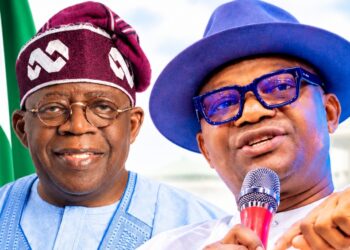
Three years ago, Nigeria’s economic story changed with one sentence. On May 29, 2023, at Eagle Square, Abuja, President Bola Ahmed Tinubu, in his inaugural speech, said:
“We commend the decision of the outgoing administration in phasing out the petrol subsidy regime which has increasingly favoured the rich more than the poor. Subsidy can no longer justify its ever-increasing costs in the wake of drying resources. We shall instead re-channel the funds into better investment in public infrastructure, education, health care and jobs that will materially improve the lives of millions.”_
Then came the off-cuff line that was not in the written speech but shook the entire nation:
“Fuel subsidy is gone.”
That single line triggered instant panic. Same day, across Warri and other cities in Delta State where I reside, filling stations witnessed massive sales as motorists rushed to buy and store fuel. Queues returned overnight. Weeks later in Paris, President Tinubu defended his decision, saying:
“We have transport challenges… I let out the giant elephant of fuel subsidy without bringing down the house.”
He has guarded that decision jealously till date.
The Price Journey: From N185 To N1,400
Before President Tinubu’s speech on the morning of May 29, 2023:
Official pump price was N185 – N198 per litre at NNPC stations
Some private stations sold between N195 N238 due to scarcity
After the “Subsidy is gone” declaration:
Day 1-3 (May 30 – June 1, 2023): Price jumped to N488 – N537 per litre
July 2023: It rose to N600 – N617 per litre. The National Bureau of Statistics (NBS) recorded it as a 152 percent increase in two months
Late 2023 – 2024: Price hovered between N620 – N700 per litre
December 2025: Average price was N1,048.63 nationwide (NBS)
May 2026: Price reached N1,300 – N1,400 per litre in many states due to naira devaluation and forex costs — over 600 percent increase in three years.
From May 29, 2023 till date, Nigerians have struggled. The very rich became average, and the average became poor. The rich and the poor now meet in Keke. Roads no longer witness the usual traffic jams as many have parked their cars. Families devised different means of getting a balanced diet, with many substituting crayfish for meat and fish. That was when cucumber soup emerged.
In the female fashion world, low cut, dreadlocks and natural hairstyles became a trend for women who could no longer afford attachments. Several latent abilities “woke up” as Nigerians intensified efforts to make money, delving into several online businesses. Nigerians adjusted, though grudgingly.
This period witness dynamic ways to earn a living. Online work were fully activated. Several persons commenced working from home.
Zoom meetings became a veritable tool to hold meeting . Nigerians adjusted yes we adjusted and here comes another slogan — “Subsidy is coming back again” by Dino Melaye, former representative of Kogi West Senatorial District.
Melaye, now a chieftain of the African Democratic Congress (ADC), was filmed at a political gathering in Abuja performing an anthem titled “Fuel Subsidy Return” In the video captured by AIT News, Melaye repeatedly sang “”it’s coming back again… subsidy is coming back again”_ while dancing before a backdrop of campaign posters of Atiku Abubakar. The performance has gone viral on X and Facebook.
VIDEO
It is not just entertainment, but a campaign message of Atiku Abubakar, who was ratified on May 29, 2026 as the presidential candidate of the ADC for the 2027 general election. On August 25, Atiku insisted:
“My position has not changed and will not change: I will restore it! A nation as blessed as ours has no business abandoning its citizens to hardship. Nigeria is rich enough to look after her own.”
Atiku says his plan is not a return to the old corrupt system. He promises a targeted subsidy that will reduce the cost of living and support local refineries like Dangote Refinery. On his part, Melaye, who now serves as Chairman, Protocol Committee of the ADC Convention Planning Committee, linked the anthem to hardship, pointing out that high pump prices have hiked transport fares, food prices and cost of doing business.
Vibes From The Street
In an interview with Mr. Vincent Adah, he said though subsidy removal brought harsh cost of living to Nigerians across board, he still does not want it to return.
“Nigerians have adjusted and we have never had queues in our filling stations since the removal. Queuing to buy fuel those years with so much unrest was the worst part. We have adjusted, no driving when it’s cheaper to commute via public transport,” Adah said.
The Dean of Law, Southern Delta University, Ozoro, Orerokpe Campus, Dr. Jonathan Ekperusi has a different view. He said he is in support of the return of subsidy, but with a caveat.
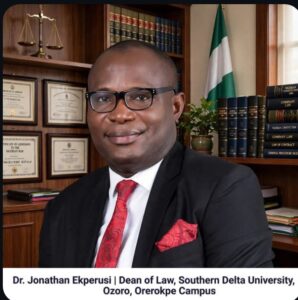
According to him, the return will only make sense if it is not hijacked by a cartel of rent-seekers.
“Energy subsidy should cut across petroleum products, electricity and solar energy. Nigerians should not be allowed to suffer the triple jeopardies of weak naira, global energy market volatility and unmitigated forex free-fall,” Ekperusi said.
In another interview with Dr. Joseph E. Eginiwin of the Department of Accountancy, Federal Polytechnic Orogun, he said subsidy removal should not be judged by how much government saves, but by what Nigerians gain.

Dr. Eginiwin described subsidy as public money used to reduce the cost of essential goods, stressing that the debate should move beyond “good or bad” to questions of who benefits, how much it costs, and whether it reaches the intended poor. While acknowledging that fuel price increase affects transport, food distribution and small businesses, he cautioned against a return to the old blanket subsidy without fixing transparency, smuggling and diversion leakages.
“What Nigeria needs is not a permanent dependence on cheaper petrol, but a targeted and transparent intervention that protects vulnerable households and public transportation, while government invests in refining, electricity and CNG alternatives,” he said.
He added that Nigerians deserve to see a tangible return for their sacrifice.
“The success of subsidy reform should not be measured simply by how much the government saves, but by what Nigerians gain from the resources that have been freed,” he concluded.
I decided to get vibes from Keke riders. I took a ride from PTI Junction to Ugbomro Junction. As we journeyed, I engaged the Keke rider:
Me: Keke, I hear say Atiku say if he win, he go return subsidy. How you see am?
Keke rider: I beg make he no win ooo. I no want make he return subsidy ooo. The thing don master us. We no fit dey queue and fight for petrol station again ooo.
Passengers joined: “We no want subsidy again ooo, we don adjust.”
In another Keke from Egbo to Otokutu, the rider preferred the return of subsidy.
Me: You say make them bring back subsidy?
Keke rider: Yes ooo madam. Make them bring the price of fuel to where Goodluck Jonathan leave am, 230 naira per litre.
Me: So you go reduce price of transportation that time ooo?
Keke rider: No ooo madam. I no dey maintain my Keke?
I smiled. He desires reduction of fuel price from N1,300 to N230 per litre but not ready to reduce transport fare. This is the Nigeria that we are — diversity in thought.
I went further to hear from foodstuff sellers. At Effurun market, a trader simply called Omo Bendel says she would prefer the return of subsidy. In her words:
“My sister, we no dey fit eat well for house again. We get generator but we no dey fit use am again sake of say we no fit buy fuel. I no fit remember when I buy dress last… I beg, this suffer too much, make petrol price come down well well I beg.”
Her neighbour who sells tomatoes quickly interrupted:
“We no want ooo. The money no go reach our side ooo. Make them put the money for our farm so that food go cheap. The high petrol don master us.”
Again, diversity in thought.
Government’s Stand
The Federal Government still defends removal, saying it saved over N1 trillion that was previously pocketed by a few rich individuals and is now channeled to infrastructure. Yet for many families who now substitute meat with crayfish, who now trek instead of drive, the slogan “It’s coming back again” gets diverse reactions.
To some it sounds like relief. Is Nigeria ready for a subsidy return? Or is this just a 2027 campaign anthem? The answer may be decided not in Abuja, but at filling stations and market squares across the country.