By Oghenefejiro Emado
23, July 2026
Delta State is making a push to become one of Nigeria’s top investment destinations, banking on large-scale infrastructure, natural resources, steady power and its coastal advantage.
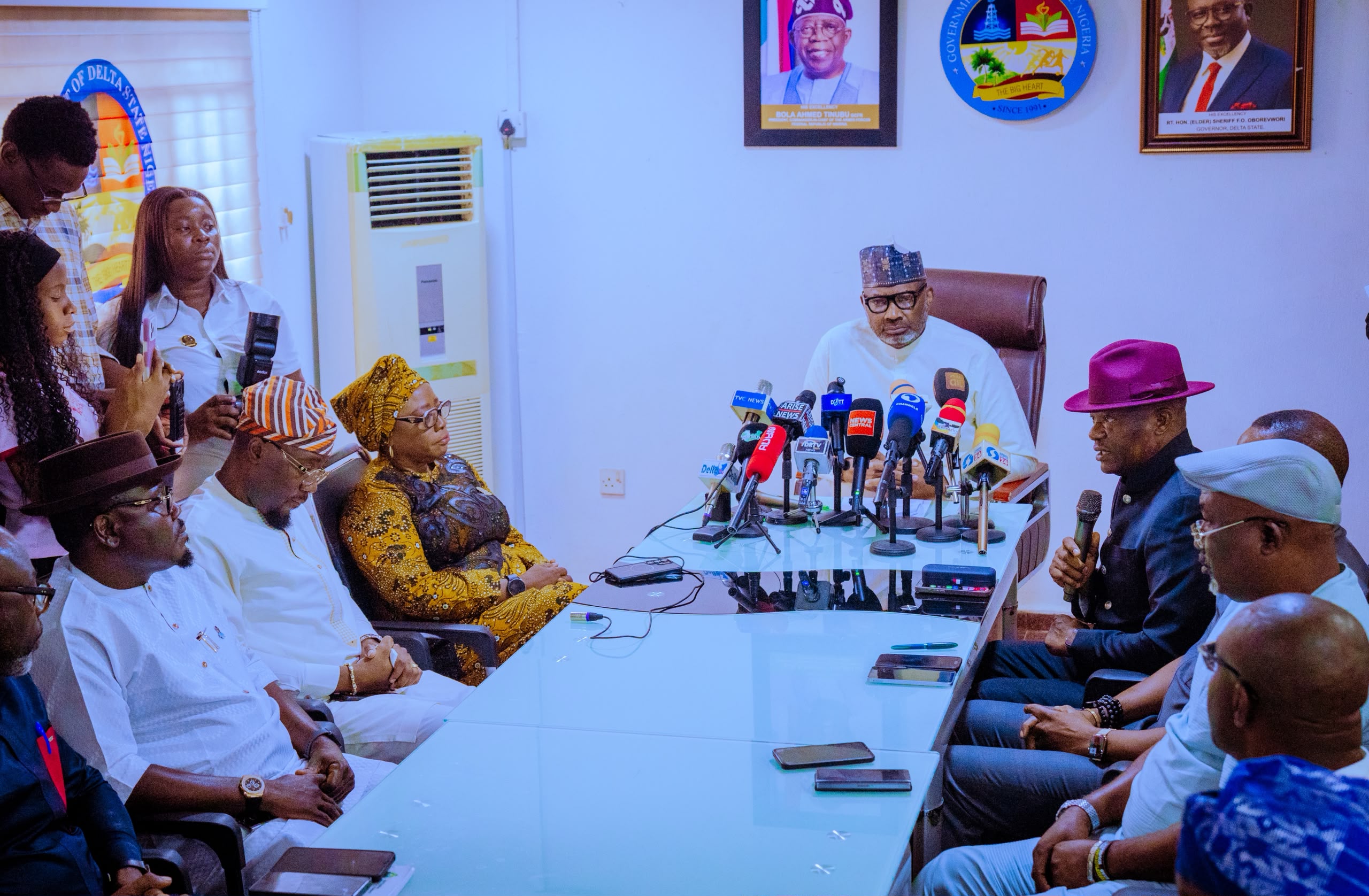
The Secretary to the State Government, Dr. Kingsley Emu, disclosed this on Wednesday during a press briefing ahead of the Delta State Economic and Investment Summit 2026 scheduled for August 3 to 5 in Asaba.
Emu said the administration of Governor Sheriff Oborevwori has spent the last three years building a foundation for industrial growth through roads, bridges, power and transport projects.
He stated that more than 2,600 kilometres of roads and over 20 bridges have been constructed and rehabilitated across the state. According to him, the projects have opened up rural areas, lowered transport costs and linked key economic zones.
One of the state’s major selling points, he noted, is the Delta Special Economic Zone. He said the zone benefits from proximity to the OB-3 gas pipeline, which allows it to offer some of the lowest and most reliable power rates in the country.
“The infrastructure has been provided. Government has created the enabling environment. Investors can come into Delta and enjoy competitive energy costs that many other states cannot offer,” Emu said.
He added that the state already runs an independent power network supplying about 8.5 megawatts to government buildings and public institutions. Ongoing reforms in the electricity sector, he said, are expected to expand access to affordable power for industries.
On maritime assets, Emu said Delta has four seaports, two airports and a 163-kilometre Atlantic coastline. He described the state as one of Nigeria’s most strategically located places for trade and logistics.
The government, he said, plans to tap into the blue economy by developing aquaculture, commercial fishing, fish feed production, cold-chain logistics, seafood processing and marine transport. He pointed to Ekpan and Ugborikoko as areas with one of West Africa’s largest clusters of fish ponds, where fish farming has created jobs and improved livelihoods.
Beyond fisheries, Emu said Delta is endowed with coal, lignite, kaolin and silica deposits that can support mining, manufacturing and power generation. Coal from parts of the state currently supplies cement companies, while plans are in place for coal-based power plants to serve industries.
The SSG said the state has engaged investors in China, Brazil and other markets over the last three years to promote Delta’s opportunities. He noted that meetings in São Paulo have produced interest from Brazilian firms expected at the summit, while Chinese companies have also shown strong interest.
To support the push, the government has produced investment prospectuses and launched a dedicated website for the summit to guide investors before and after the event.
Emu expressed optimism that the summit would drive Delta’s economic transformation by attracting capital that can deepen industrialization, boost exports and create jobs for young people.
“The opportunities are enormous. We have the resources, the infrastructure, the connectivity and the political will. What we seek now is partnership with investors who are ready to grow with Delta,” he said.
The Delta State Economic and Investment Summit 2026 will hold in Asaba from August 3 to 5.