By Oghenefejiro Emado
31, July 2026
Stakeholders across governance, electoral administration, academia, civil society and the media have called for sweeping electoral reforms, stronger democratic institutions and deeper citizen participation ahead of Nigeria’s 2027 general elections.
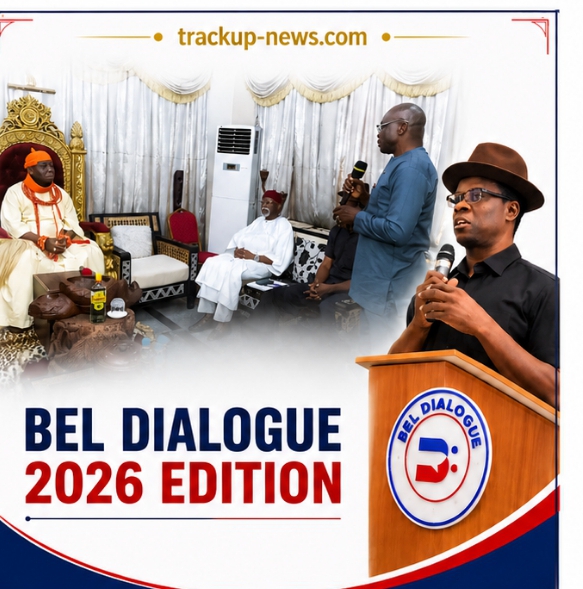
The call was made on Thursday in Asaba during the 2026 edition of BEL Dialogue, an annual public policy forum organised by Bel Media Consult Limited, publishers of Ndokwa Reporters and The Brief.
The forum was held under the theme “Democracy That Works: Bridging the Gap Between Votes, Results and Institutional Accountability.” Discussions focused on the state of Nigeria’s democracy, the electoral process, and the performance of institutions saddled with democratic governance.
Prior to the dialogue, a delegation led by the Chairman of the BEL Dialogue Advisory Board, Pharm. Paul O. Enebeli, visited the palace of His Royal Majesty, Asagba Prof. Epiphany Chigbogu Azinge, SAN.
The delegation briefed the monarch on the objectives of the forum and sought his royal blessings.
Receiving the team, the Asagba commended Bel Media Consult for creating a platform to strengthen democratic governance and promote national conversation on electoral accountability. He said hosting the dialogue in Asaba was significant and expressed hope that it would position the Delta State capital as a hub for discussions on national development and democratic reforms.
“I have listened attentively to the presentation on what BEL Media Consult intends to achieve. It is time we begin to decentralise governance. I am pleased that BEL Dialogue is taking place in Asaba because we want the city to remain at the forefront of national conversations,” the monarch said.
The Asagba described the theme as timely, coming ahead of political campaigns for the 2027 elections. He said the forum would help sensitise citizens on democratic participation and accountability, and expressed hope that its recommendations would contribute to improving the country’s electoral system.
According to him, democracy must continue to evolve to meet the aspirations of Nigerians. “We need a democracy that works. Our objective is not to condemn anyone but to contribute ideas that will strengthen democratic governance and improve the country’s future,” he stated.
The royal father also highlighted community initiatives by the Asaba Palace in healthcare, environmental sanitation and social welfare.
He noted that traditional institutions have a role to play in complementing government efforts. He further observed that despite Nigeria’s abundant natural resources, poor governance had slowed progress and urged citizens and leaders to focus on building stronger institutions.
Earlier, Pharm. Enebeli commended the Asagba for his leadership since ascending the throne and explained that BEL Dialogue was set up to encourage informed public discourse on governance, democratic accountability and national development, and to proffer practical solutions to challenges facing the country’s democracy.
Declaring the forum open, Enebeli said the 2026 theme was chosen deliberately as the nation approaches another election cycle. He said democracy can only thrive when election results reflect the will of the people and when institutions managing elections are independent, transparent and accountable. He added that the dialogue was designed to promote peaceful civic engagement, encourage informed participation in elections, and stimulate conversations that can strengthen democratic governance.
Chairman of the occasion and former Resident Electoral Commissioner of the Independent National Electoral Commission, Hon. Mike Igini, said integrity, institutional independence and adherence to the rule of law are critical to sustaining democracy.
Reviewing Nigeria’s democratic journey, Igini said the credibility of elections depends more on the integrity of the process than on the announcement of results. “When the process is transparent, fair and credible, the result naturally earns public trust. However, when the process is compromised, the legitimacy of the outcome will inevitably be questioned,” he said.
He also stressed the need for an independent judiciary to protect democratic values and ensure electoral justice, and called for stronger institutions that serve the interests of the people.
The Special Guest of Honour, Delta State Commissioner for Works (Rural Roads) and Public Information, Hon. Charles Ehiedu Aniagwu, was represented by Barr. Timothy Agbaragu. He described the dialogue as a valuable platform for engagement on governance and democratic development, and urged citizens, political parties, government institutions and other stakeholders to work together to protect the integrity of elections and strengthen democratic values.
The forum featured panel discussions by Prof. Andrew Agboro, Hon. Gibson Alporhe, Dr. Monday Michaels Ashibogu, Ambassador Augusta Chibuzor Keneboh and Lady Ejiro Umukoro.
The session was moderated by veteran broadcaster Mr. Lawrence Okpewho.
Participants from government, political parties, civil society organisations, professional bodies, women groups, community leaders and the media took part in the discussions.
They raised concerns over ambiguities in the electoral laws, inadequate funding for INEC and security agencies, weak enforcement of sanctions against electoral offenders, voter apathy, poor civic education, corruption and the absence of ideology-driven politics.
The stakeholders maintained that democracy should reflect the genuine will of the electorate and called for reforms that ensure election outcomes are determined by votes cast at polling units, rather than by prolonged post-election litigation.
They advocated free, fair, credible and inclusive elections, and urged INEC, security agencies, political parties and other actors to operate within the law and uphold transparency, fairness and accountability throughout the electoral process.
Other recommendations included clearer electoral laws, stronger enforcement of electoral rules, adequate funding for electoral and security institutions, and sustained civic education to promote informed participation.
Participants also stressed that recruitment into public institutions should be based on merit, competence and integrity, rather than ethnic, religious or sectional considerations. They argued that merit-based appointments would strengthen institutions and drive national development. They further called for issue-based politics driven by competence, service and ideology, and insisted that democratic institutions must be stronger than the individuals who occupy public offices.
The high point of the event was the presentation of the BEL Dialogue Award for Practical Democracy to former INEC Resident Electoral Commissioner, Hon. Mike Igini, in recognition of his contributions to electoral integrity, democratic governance and the promotion of credible elections in Nigeria.