13, July, 226
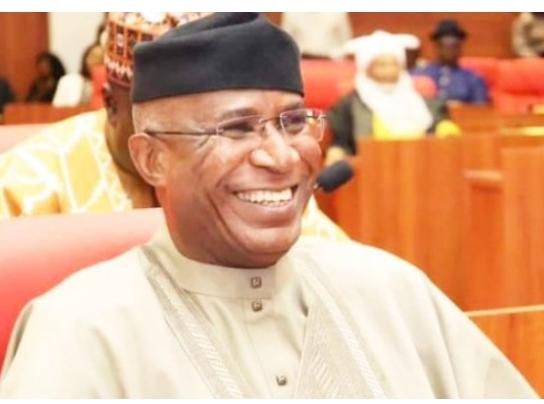
Former Deputy President of the 9th Senate, Senator Ovie Omo-Age, has finally responded to years of criticism over the failure to create Ethiope State.
He says the project was blocked by the Buhari government’s outright rejection of new states. He also promised that if he returns to the Senate after 2027, he will personally sponsor and lay the Ethiope State Creation Bill “in the very first legislative sitting.”*
This was contained in a statement released by his Special Adviser on Strategy and Communications, Godwin Anaughe.
The statement was issued to address fresh debates among Urhobo stakeholders regarding the Ethiope State agitation. Some of the current discussions referenced comments Omo-Agege made to the Urhobo Progress Union, UPU, in September 2020.
According to the statement, the purpose is to clarify recurring questions about Omo-Age’s role on the Ethiope State matter during his tenure in office.
The demand for Ethiope State to be created from Delta State has been part of Urhobo political conversation for many years. The issue always gains momentum anytime the National Assembly begins constitution amendment or when restructuring is being discussed nationally.
Supporters argue that an Ethiope State will allow the Urhobo people, one of Nigeria’s largest ethnic groups, to have direct control over their resources and representation, which are currently managed within Delta State.
The 2020 meeting with UPU is important because at that time Omo-Age was not only Deputy Senate President, but also Chairman of the Senate Committee on Constitution Review.
That position put him at the center of any state creation process in the National Assembly. It is this dual role that has now become a subject of debate among Urhobo leaders.
The statement recalled that in September 2020, Omo-Age received a UPU delegation led by the Okobaro of Ughievwen Kingdom, HRM Dr. Matthew Ediri Egbi, JP, Owahwa II.
He told them that creating a state is a constitutional process. It requires wide national agreement, lobbying across party and regional lines, and most importantly, the support of the government in power at the time.
Omo-Agege’s team said this advice reflected the political reality at the time and did not mean he was unwilling to fight for the Urhobo cause. They insisted that he used his office to ensure Urhobo interests were presented at the highest levels of government.
The statement placed heavy emphasis on one private meeting. It stated that Omo-Agege, as Chairman of the Senate Committee on Constitution Review, met directly with former President Muhammadu Buhari and the Deputy Speaker of the House of Representatives. At that meeting, he presented more than 100 constitutional amendment proposals collected from members of the National Assembly.
The proposals included requests for new states from different regions of the country.
During that meeting, Omo-Agege reportedly asked Buhari directly which of the proposals the presidency would support and which it would reject, and the reasons.
According to the statement, Buhari’s position was clear: his administration would not support the creation of any new state.
Because of that position, Omo-Agege’s camp argued that moving a bill forward at the time would have been meaningless.
They described it as “legislative theatre, not governance,” because the Nigerian Constitution requires executive involvement at critical stages for state creation to succeed.
With that reality, Omo-Agege chose not to pursue a symbolic effort that was bound to fail. Instead, he focused on keeping the Urhobo case alive and maintaining access to federal decision-makers, believing that a better political opportunity would come later.
The statement said that opportunity has now arrived. It pointed to President Bola Ahmed Tinubu’s expressed support for state creation as evidence that “the executive door that was shut for eight years is now open.” With that major obstacle removed, the statement said the conversation should shift from what happened in the past to what is being done now.
It then challenged the current federal lawmakers from the Urhobo-speaking Delta Central senatorial district.
The question posed was: if the presidency is now open to state creation, where is the Ethiope State Creation Bill and where is the motion currently before the Senate?
This effectively moves scrutiny away from Omo-Agege’s past actions and places it on those currently holding legislative positions.
The timing and tone of the statement show that it is not just a clarification, but also the beginning of political positioning ahead of the 2027 elections.
By placing responsibility for the delay squarely on the Buhari administration, which left office in 2023, the statement seeks to protect Omo-Age from criticism for the period between 2020 and now, when Ethiope State was not created despite his leadership of the constitution review committee.
It also positions Omo-Age as the person best suited to complete the project when conditions are right, while questioning the leadership of some of his rivals.
The statement was most critical of Senator Ede Dafinone. It accused him of refusing to lead the agitation when approached, publicly mocking the organizers, and making divisive comments against his own people.
It also alleged that he supported the creation of another state elsewhere, and that when the Ethiope campaign was gaining traction, he wrote an article to discredit its leaders.
The statement claimed he remained silent while others invested time and resources to sustain the struggle.
The camp described this as “a failure of leadership” and “a betrayal of the Urhobo Nation.”
In contrast, the statement said Omo-Agege never wrote or supported any article or comment attacking other Urhobo leaders involved in the Ethiope State project, and described his conduct as measured and responsible.
This direct comparison shows that the Ethiope State issue is now tied to the rivalry between the two senators, and will likely feature prominently as politics heats up toward 2027.
Omo-Agege’s camp made a firm commitment: if Ethiope State is not created before the 2027 general elections, he will sponsor the Ethiope State Creation Bill in the very first sitting of the Senate after his return.
He promised to build bipartisan support in both the Senate and House of Representatives, present the case directly to the presidency, and work with all stakeholders to ensure the project succeeds.
He described the 2027 mandate as one that must be “purposefully and relentlessly deployed” for this purpose.
The statement framed this pledge not as a new promise, but as a continuation of work already started.
It appreciated the Ethiope State Creation Committee and listed members who have served without pay over the years.
They include Chief Dr. Christopher Ominimini Obiuwevbi, Dr. Wilson Omene, Engr. Chief Anthony Onyokoko, Ambassador Chief Dr. Omodoro Adeseye-Ogunlewe, Bishop Blessing Erifeta, Bishop Dr. Harriton Akpodiete, and Most Reverend Dr. Isaac Obie. The UPU was also acknowledged for providing moral and institutional support to the movement.
The statement ended with an appeal to all federal legislators from Delta Central to put aside party and personal differences and jointly move the Ethiope State Creation Bill forward.
It warned that the current opportunity “will not stay open forever.” It also called on the UPU, as the highest socio-cultural body for Urhobo people worldwide, to give non-partisan direction and unite everyone behind what it called “this final push.”