By Our Reporters
05, September 2026
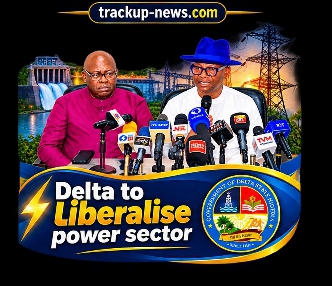
The Delta State Government is set to break the monopoly in its electricity sector, with a bold plan to liberalise power generation and throw the door open to private investors.
The move, according to the government, is aimed at boosting supply, cutting dependence on the failing national grid, and using Delta’s massive gas deposits to power homes and businesses.
Commissioner for Works (Rural Roads) and Public Information, Mr. Charles Aniagwu, disclosed this Thursday in Asaba during a press conference, flanked by the Executive Assistant to the Governor on New Media, Mr. Felix Ofou.
“We are not going back to the era where government alone runs business. We are liberalising. We are bringing in the private sector through PPPs,” Aniagwu declared.
At the heart of the plan is Delta’s gas. Aniagwu said investors were taken to the Kwale Free Trade Zone during the state’s Economic Summit to see first-hand the gas reserves waiting to be converted to electricity.
The logic is simple: more power generated in Delta means less pressure on the national grid.
He pointed to the 8.5MW Independent Power Plant behind the State Secretariat in Asaba as proof of concept.
“With that IPP, the entire secretariat is off the national grid. That means the power that would have gone to the secretariat is now freed up for houses, shops and factories,” he said.
Aniagwu also announced a major partnership with Supply Power to inject an additional *120 megawatts* into the national grid from Delta — a direct boost for SMEs that have been crippled by poor supply.
The state, he revealed, is already intervening where DISCOs have failed, including extending the grid from Abraka deep into the Ndokwa axis to connect more communities.
He however slammed the exploitation of communities forced to buy their own transformers only for DISCOs to take over and still charge them.
“We cannot allow poor power supply to kill our economy. If communities are in darkness, businesses die and insecurity grows,” he warned.
To protect consumers and investors, Aniagwu said the Ministry of Energy and a special committee are finalising a new regulatory framework.
A proposed Delta Energy Commission will license new power producers, fix fair tariffs, and regulate distribution — from overhead wires to underground cables — to prevent electrocution and ensure safety.
“The goal is clear: Efficient power, sustainable supply, and electricity that works for Deltans, not against them,” Aniagwu said.